
For therapists
Therapy notes: formats, examples and how to keep them private
Therapy notes are your written record of a session: what the client brought, what you did, and what happens next. The common formats are SOAP, DAP and BIRP, plus short progress notes. Below, each is explained with a fictional example, along with what to include and what to leave out.
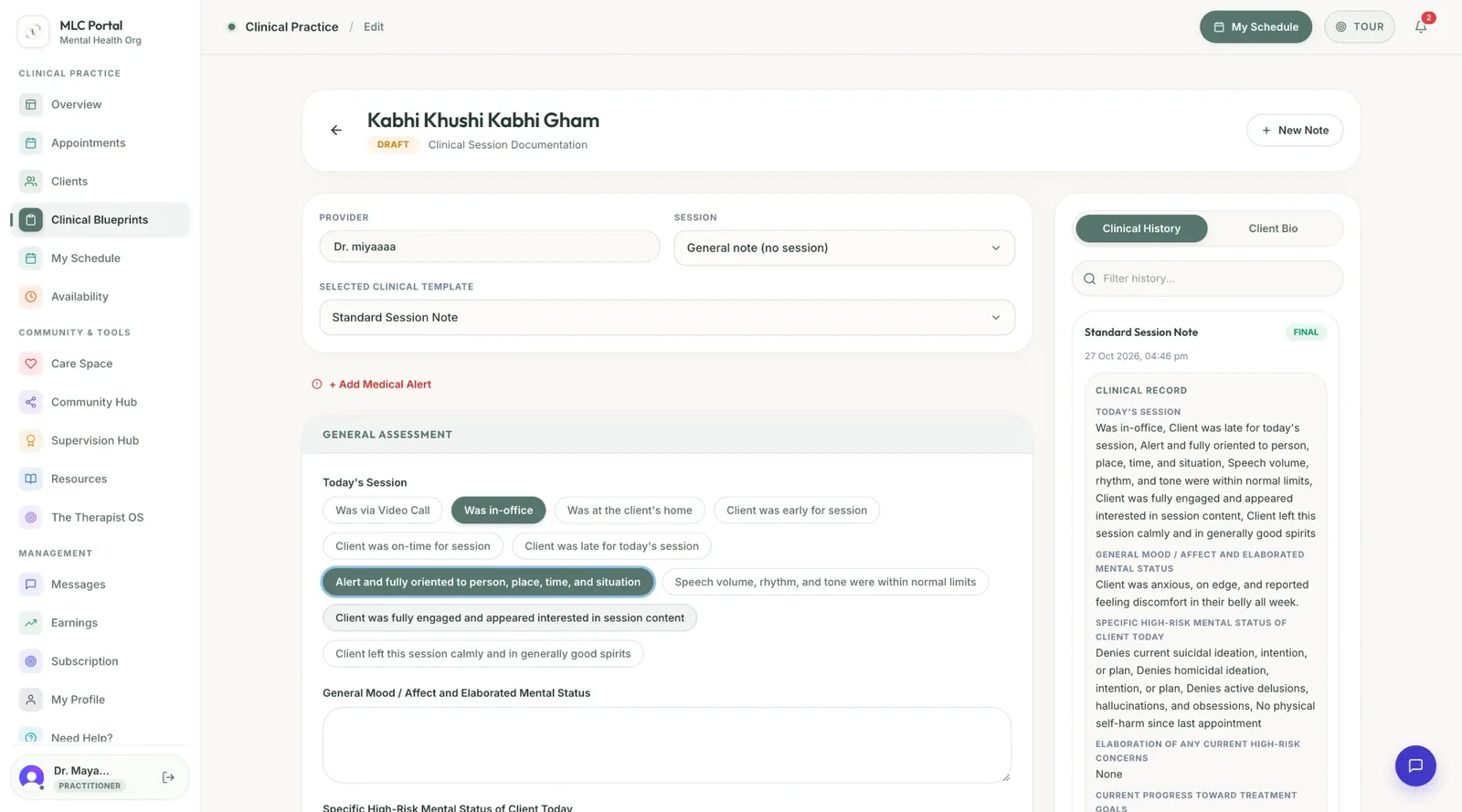
Demo · fictional data
Demonstration only. All names, conversations and personal details shown are fictional and do not represent real clients or users.
Formats
SOAP, DAP, BIRP and progress notes
SOAP
Subjective, Objective, Assessment, Plan
A widely used format that keeps what the client says apart from what you observe.
Subjective. What the client reports, in their own words.
Objective. What you observe: appearance, mood, behaviour.
Assessment. Your clinical understanding of the session.
Plan. What happens next: homework, focus for the next session.
Fictional example
S: Client reports sleeping badly for two weeks and worrying about a work deadline.
O: Looked tired. Spoke quickly at first and slowed as the session went on.
A: Worry linked to work pressure. Coping skills are helping a little.
P: Practise the breathing exercise each night. Review the sleep diary next session.
DAP
Data, Assessment, Plan
A shorter format that puts the client's report and your observations together as one section.
Data. What was said and observed in the session.
Assessment. What you make of it.
Plan. What comes next.
Fictional example
D: Client described arguments with a flatmate about shared chores. Calm and engaged throughout.
A: Difficulty saying what they need without it turning into a row.
P: Rehearse two calm requests in session. Try one this week.
BIRP
Behaviour, Intervention, Response, Plan
Useful when you want a clear record of what you did and how the client responded.
Behaviour. What the client presented with and how they behaved.
Intervention. What you did in the session.
Response. How the client responded.
Plan. What comes next.
Fictional example
B: Client arrived tense and said exams were making it hard to concentrate.
I: Taught a short grounding exercise and practised it together.
R: Client said they felt calmer and wanted to use it before study.
P: Use the exercise before each study block. Check how it went next week.
Progress note
A short summary across sessions
A brief note that tracks movement toward the goals you agreed, session by session.
Focus. What this session or stretch of sessions was about.
Progress. What has moved, and what has not.
Next. What you will do next.
Fictional example
Focus: Sessions 3 to 4: sleep and workload.
Progress: Bedtime is more regular. Still waking early on busy days.
Next: Add a short wind-down routine and review in two weeks.
What to include
The date, session length and how the session was held (for example, video).
The main themes the client raised, in plain language.
What you did, so the next session can build on it.
Any risk you noticed and what you did about it.
The plan: what the client will try and what you will follow up.
What to leave out
Your own guesses written as if they were facts.
Long word-for-word quotes that are not needed.
Details about other people that are not needed to understand the client.
Jargon you would not be comfortable explaining to the client.
Notes written weeks later from memory.
Keeping notes private
Session notes are some of the most sensitive records you hold. Indian law, including the Mental Healthcare Act 2017, protects the confidentiality of people receiving mental health care. Keep notes where only you can reach them, avoid sending them by chat or email, and follow the code of ethics of your professional body and the rules that apply to your work.
Write and store notes in MLC Pro
In MLC Pro you write notes from templates in Clinical Blueprints, keep them as drafts, finalise them when you are done, and export a PDF. Each client's earlier notes sit beside the editor as you write, and records are visible only to the practitioner responsible for them, following HIPAA best practices and the DPDP Act.
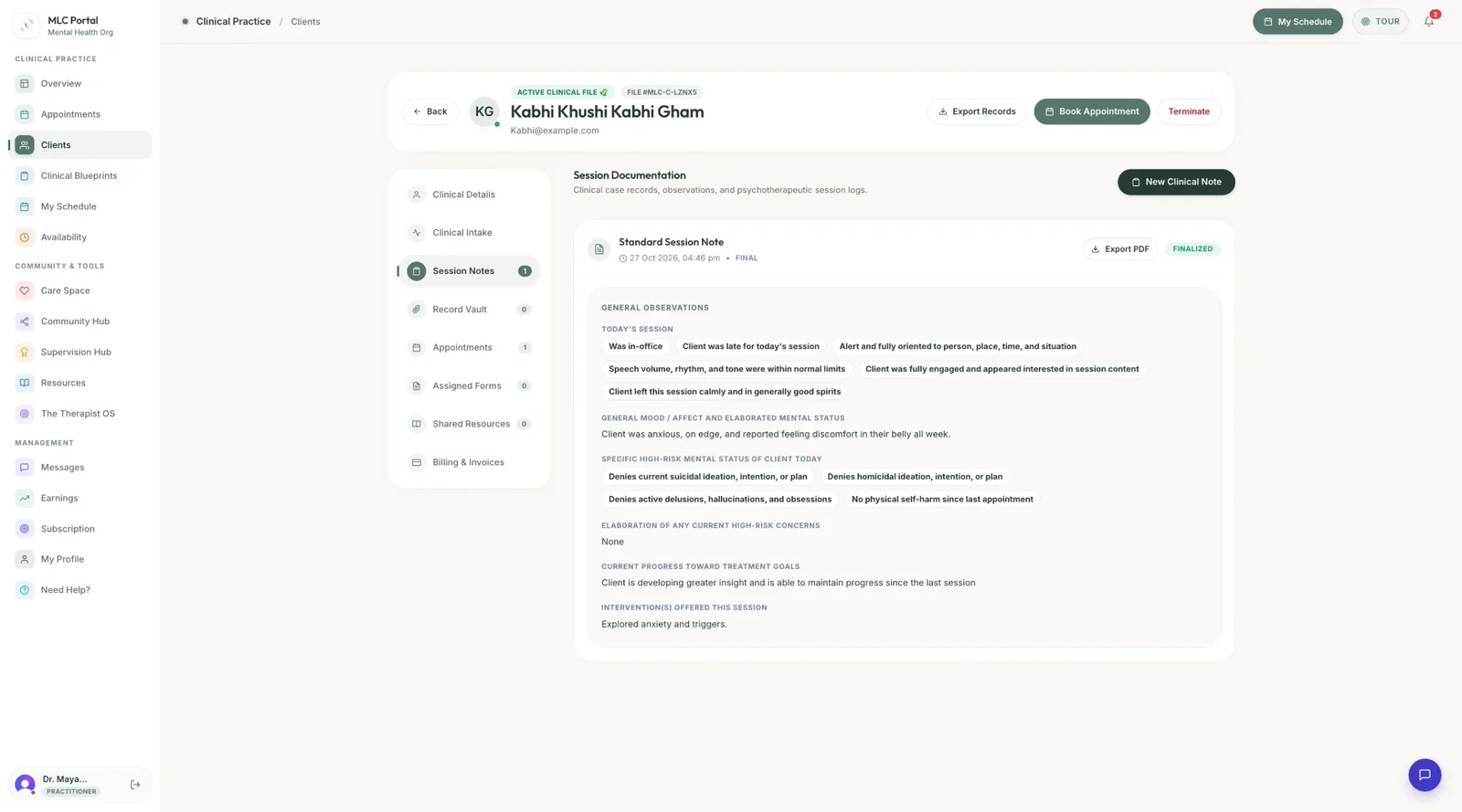
Demo · fictional data
Demonstration only. All names, conversations and personal details shown are fictional and do not represent real clients or users.
Therapist community
Join the MLC therapist community on WhatsApp
We are building a therapist-first platform for mental health professionals in India, and we want your suggestions. Tell us what tool, feature or resource would make your work easier.
Jobs and internship opportunities
Training and supervision programmes
Workshops, events and webinars
Upcoming tools and professional resources
Networking and collaborations
Therapists, counsellors and psychology students are welcome, and you can share your own opportunities and events too.